





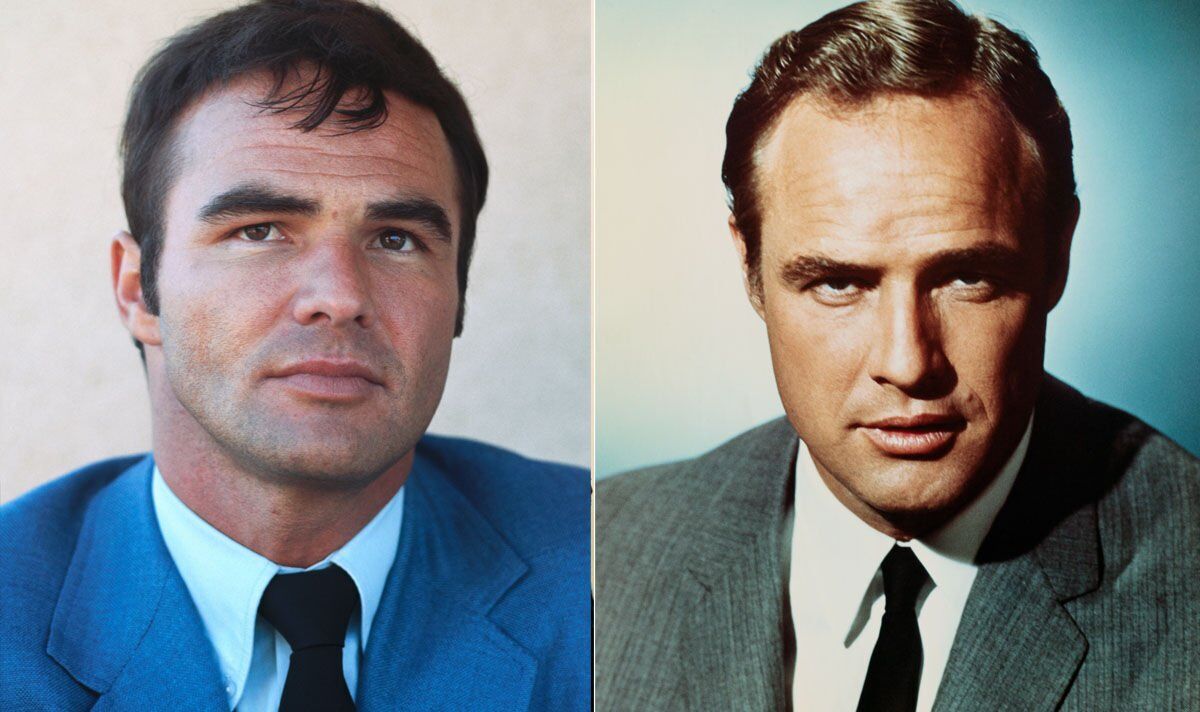
The film industry has seen its share of famous rivalries, but few have been as lopsided as the bitter feud between Burt Reynolds and Marlon Brando, a saga that unfolded over a staggering four decades.
Despite Brando’s open disdain for Reynolds, the latter rarely retaliated publicly.
Instead, he managed a few clever jabs during televised appearances, keeping the fire of their ongoing animosity smoldering.
In the vibrant 1970s, Reynolds was a household name, yet his career path took unexpected turns as he declined several high-profile roles that could have further cemented his stardom.
He passed on being Sean Connery’s successor as James Bond, shrugged off a chance to portray Han Solo in Star Wars, and declined parts in classics like One Flew Over the Cuckoo’s Nest, which later earned Jack Nicholson an Oscar.
However, perhaps the most notable rejection was that of Michael Corleone in The Godfather, a role famously filled by Al Pacino.
Brando’s hostility towards Reynolds ran deep, birthed during a 1963 episode of The Twilight Zone, where Reynolds played a character that parodied the nuances of Brando’s acting style.
This mockery wasn’t taken lightly; it evidently struck a nerve with Brando, leading to a long-standing grudge that would surface again and again.
Fast forward to the production of Apocalypse Now nearly 20 years later, Reynolds was back on Brando’s radar—this time as a potential cast member.
However, upon hearing the news, Brando’s displeasure was palpable.
Audio recordings from the film’s set capture the actor’s scathing remarks about Reynolds, unearthing a stream of vitriol that underscored Brando’s feelings towards his rival.
He famously declared Reynolds “the epitome of something that makes me want to throw up” and criticized him for what he viewed as his self-obsession and shallowness as an actor.
These statements, dripping with disdain, were laden with irony given Brando’s own notorious reputation for being difficult and unprepared during filming.
Reynolds, ever knowing how to respond in kind, took to Saturday Night Live to deliver his own satirical version of Brando.
In a skit that showed a fictional Brando preoccupied with food during an interview, Reynolds turned the tables on his rival without ever uttering a harsh word in the media.
His subtle but biting impersonations conveyed everything needed to express his feelings about the legendary actor.
On a more personal note, Reynolds admitted to Andy Cohen that he found Brando’s animosity somewhat flattering, stating it was somewhat of a badge of honor to irritate such an acting heavyweight.
It was this uniqueness that perhaps set Reynolds apart and kept the feud alive for so long.
Despite Brando’s formidable talent and iconic status, his off-camera antics were known to be outrageous.
From outrageous demands to bizarre on-set behavior that unnerved even seasoned Hollywood executives, Brando managed to balance his infamous reputation as a difficult actor with an undeniable legacy as one of cinema’s greatest talents.
Reynolds was acutely aware of the barriers Brando placed in his path to success.
Although their careers overlapped, the shadow of Brando loomed large over Reynolds’ path.
In interviews, he would often reference the roles he lost to the very pressures Brando created, stressing the industry’s knowledge of their ongoing feud.
The turning point highlighted in memoirs reveals that at one point, Brando’s actions almost derailed Reynolds’ trajectory entirely.
The refusal to work together created opportunities for others, but the lingering question remains—what could have been if their paths hadn’t crossed in such an adversarial manner?
In recent discussions about the feud, Reynolds shared memories of their rivalry and acknowledged the bizarre nature of Brando’s outrage.
It was both a source of humor and a persistent reality for Reynolds, whose perspective on the Hollywood machine remains fascinating to this day.
As history remembers these two titans, it’s clear that the feud was not merely about competition between two actors but rather a testament to the egos and intricacies of the film industry.
Their story continues to captivate audiences, drawing intrigue into two iconic figures who couldn’t quite find harmony amidst the chaos of Hollywood fame.
